Forty Years of Setlists: What The Varukers Choose to Play Tells You Everything
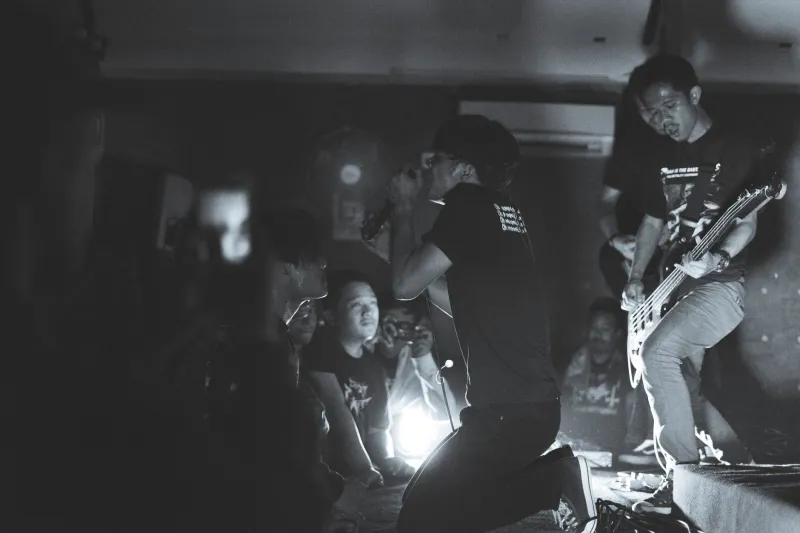
There's an argument — and it's a decent one — that the most honest document a band ever produces isn't an album. It's a setlist. Albums are considered things, laboured over and sequenced with intent. A setlist, scrawled on the back of a fag packet or taped to a monitor at floor level, is a live contract with the room. It's the band saying: this is who we are tonight.
For The Varukers, that contract has been rewritten hundreds of times across four decades, and tracing those rewrites is one of the more revealing exercises you can do as a fan. What emerges isn't just a catalogue overview — it's a biography told in track selections.
The Early Eruption: 1980–1984
The formative years were about velocity and volume. Early Varukers sets, as reconstructed from fan accounts originating from Coventry and the broader Midlands circuit, were short, brutal, and almost entirely comprised of material that would eventually surface on Bloodsuckers and the first clutch of singles. Songs like "Protest and Survive" and "Die for Your Government" weren't just set staples — they were the whole point.
Bootleg recordings from this period, circulated on cassette through the post and now partially digitised by collectors, reveal sets that rarely exceeded twenty minutes. That wasn't laziness. That was the philosophy made physical. Get in, level the room, get out. The pacing was relentless, and there was no space between tracks for the crowd to breathe, let alone applaud. You weren't there to clap. You were there to collide.
Fans who were present at early gigs in Birmingham and London's squat circuit consistently describe a setlist that felt less like a selection and more like a single sustained detonation. The idea of "picking favourites" didn't really apply — everything was a favourite because everything was new and everything was furious.
The Mid-Period Consolidation: 1985–1991
By the mid-eighties, something interesting happened. The catalogue had grown enough that choices genuinely had to be made, and those choices started revealing a band with a developing sense of their own identity.
Albums like Die for Your Government and Nothing's Changed gave the setlist architecture it hadn't previously needed. There were now openers, closers, and a middle section where the band could stretch slightly without losing the room. Tracks from the earlier period began to function as callbacks — moments where the crowd, now more familiar with the material, could properly respond.
This is also the era where the first retirements happened. Certain early songs quietly disappeared from rotation, not because the band had disowned them, but because newer material was doing the same job with more precision. It's a distinction worth making: retiring a song isn't the same as rejecting it. It often means the idea has been superseded by a sharper version of itself.
Fan memories from this period — collected through forum posts and zine interviews over the years — frequently note the shift in how the band occupied the stage. Less pure chaos, more deliberate fury. The setlist started to feel like it had been thought about, even if the execution remained anything but careful.
The Resurrection Years: Late 1990s and 2000s
The Varukers' periods of reduced activity followed by returns gave their setlists a quality that continuous bands rarely achieve: genuine retrospective weight. When they came back, they weren't just playing songs — they were excavating them.
This is when the archaeology really begins. Songs that had been dormant for years resurfaced, and their reappearance wasn't random. There's a clear pattern in documented setlists from this era of the band reaching back to material that resonated with whatever was happening politically and socially in the UK at the time. A track that felt like period-specific rage in 1983 could land with renewed venom in 2003 when the context had shifted — or, more accurately, when it became clear the context hadn't shifted nearly enough.
Anti-war material, songs about state violence, tracks about institutional indifference to working-class communities — these weren't heritage pieces when they came back into rotation. They were live ammunition again. That's the thing about The Varukers' songwriting: it was never tied tightly enough to a specific moment to become a museum exhibit. The targets were structural, not topical, and structures don't go away.
The Modern Era: 2010s to Present
Contemporary Varukers setlists, cross-referenced from gig reviews, fan-filmed footage, and the band's own social posts, show a different kind of curation. There's a confidence here that the earlier eras were still building towards — a willingness to trust the audience with deeper cuts alongside the reliables, and a refusal to simply run the hits for the sake of an easy night.
What's notable is how the band manages the tension between accessibility and integrity. A newer fan coming to a Varukers show in 2024 will get enough of the essential material to understand why the room is packed. But they'll also get songs that complicate the picture — tracks that don't fit neatly into the "pure aggression" reading of the band, or older material that's been dusted off specifically because it speaks to something current.
There's also been a documented resurgence of certain songs that skipped entire decades of setlists before returning. The reasons aren't always obvious, and the band hasn't always been forthcoming about the logic. But the pattern suggests that retirement is never truly permanent — it's more like suspension pending relevance.
What the Setlist Actually Tells You
Taken as a whole, the evolving Varukers setlist is a document of a band that has never confused legacy with stasis. They've been ruthless about dropping material that no longer serves the moment and equally unsentimental about bringing things back when the moment demands it.
There's also something worth noting about what has never left the setlist — the handful of songs that have appeared in virtually every documented show across every era. These aren't just crowd-pleasers (though they are that). They're the load-bearing walls of the Varukers live experience, the tracks that define what the band is at its most essential, regardless of lineup or context or the size of the venue.
For fans who've been following the band across decades, reading a setlist isn't just a way to know what songs were played. It's a way of understanding where the band's head is at — what they're angry about, what they're proud of, what they think needs saying right now. In that sense, the setlist is the most honest thing The Varukers produce.
And forty-odd years in, it's still got plenty of teeth.