Damp Walls and Decent Sounds: Inside the Scrappy Recording Spaces That Shaped The Varukers
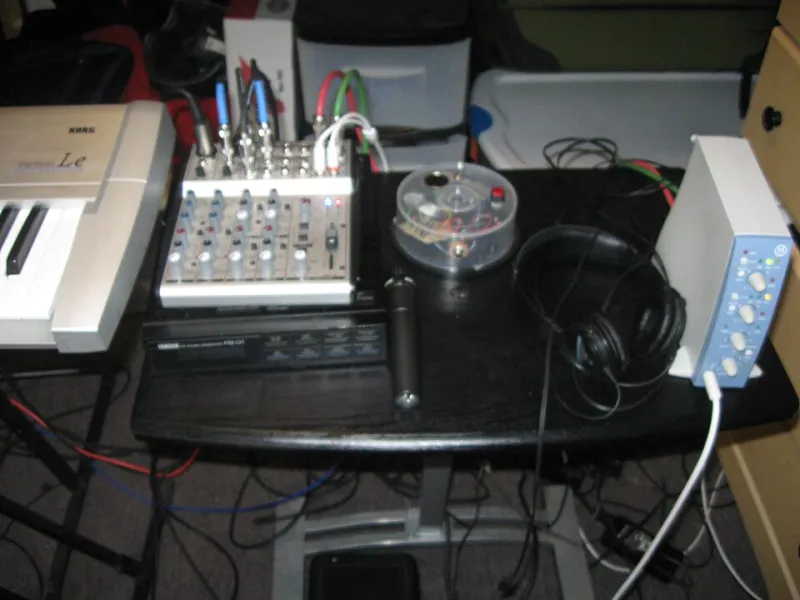
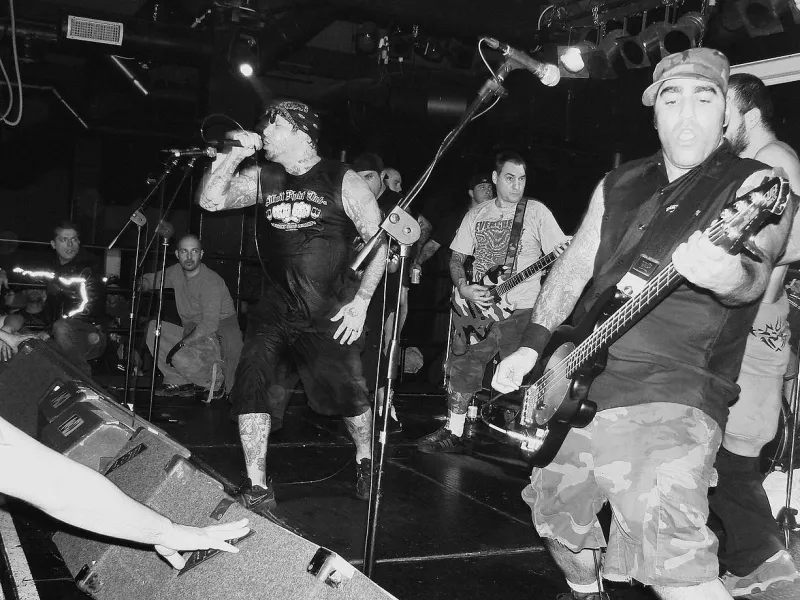
Photo: Jordan Colburn, CC BY-SA 2.0, via Wikimedia Commons
There's a particular smell to a room that's been turned into a recording space without any formal conversion work. Damp carpet over concrete. Egg boxes stapled to plasterboard. The faint chemical trace of soldering flux from a recently repaired cable. If you've spent any time in the grassroots UK music scene, you know it immediately. It smells like something being made against the odds.
The Varukers have recorded in rooms like that more than once. In fact, across a career spanning four decades, the band's recording history reads less like a studio discography and more like a guided tour of British punk's unofficial infrastructure — the network of semi-converted spaces, borrowed gear, and quietly skilled engineers that made records happen when there was no budget for anything more formal.
That history is worth telling properly. Not because it's a tale of making do, but because the constraints of those environments shaped the sound in ways that no amount of SSL desk time could have replicated.
The Myth of the Professional Studio
The mainstream music press has always had a soft spot for the narrative of the recording studio as cathedral — a hallowed space where albums are transfigured from rough ideas into finished art. Abbey Road. Rockfield. RAK. The names carry weight, and the weight is partly deserved. Proper acoustic treatment, properly maintained outboard gear, and an experienced house engineer do make a difference.
But that narrative also obscures something important: some of the most vital, energetic, and genuinely alive-sounding records in British music were made in rooms that didn't appear in any trade directory. The early Discharge recordings. The Exploited's debut. Countless anarcho-punk releases on Crass Records, recorded in a farmhouse in Essex with equipment that would have embarrassed a mid-tier local radio station.
The Varukers belong to this tradition. Their early recordings carry a rawness that isn't accidental and isn't a limitation — it's a sonic signature, the direct result of recording in spaces where the room itself becomes part of the sound.
Converted Spaces and Capable Hands
Through the 1980s, the practical reality for a band like The Varukers was straightforward: you recorded where you could afford to record, and you worked with whoever understood what you were trying to do. Sometimes that was a small commercial studio in the Midlands that offered cheap overnight rates. Sometimes it was a rehearsal room with a four-track bolted to the wall and a bloke who'd taught himself to use it by reading the manual twice and experimenting until something worked.
What united these environments wasn't equipment quality. It was attitude. The engineers and producers who worked with punk bands in that era — many of them self-taught, most of them working for very little money — understood that the goal wasn't polish. It was capture. Get the band in the room, get the levels right, and record something that sounds like the band actually sounds. No compression smoothing out the aggression. No reverb softening the edges. Just the thing itself, on tape.
That approach required a specific kind of skill that doesn't always get credited. Running a session in a converted warehouse with dodgy power and no acoustic treatment means solving problems on the fly, constantly. Hum in the signal chain. A snare that resonates oddly because of the ceiling height. A guitar amp that clips at the wrong moment. The engineers who navigated those sessions weren't less skilled than their counterparts in proper studios. They were differently skilled — more improvisational, more practical, better at finding solutions with whatever was to hand.
The Living Room Sessions
Not everything was done in purpose-built spaces, even of the unofficial variety. Part of The Varukers' recording history involves the kind of sessions that happened in ordinary domestic settings — a front room with the furniture pushed back, a spare bedroom with duvets hung over the windows for a bit of damping, a kitchen table with a four-track cassette recorder and a tangle of XLR cables running through to the next room.
These sessions had a particular quality. The intimacy of the space translated directly into the recording. There was no psychological distance between the band and the music — no sense of performing for a room, because the room was someone's house. The informality was productive. Ideas got tried quickly. Arrangements got settled in real time. The recording was less a separate stage of the creative process and more a continuation of the same conversation that had been happening in rehearsal.
There's also something to be said for the lack of clock pressure. Commercial studio time, even cheap commercial studio time, creates anxiety. Every hour costs money. In a mate's living room, you can spend twenty minutes trying something daft, decide it doesn't work, and go back to the original idea without anyone watching the meter. Some of the best moments on punk records came from exactly that kind of low-stakes experimentation.
The Engineers You've Never Heard Of
The professional recording world has its celebrated names — producers who've become as famous as the artists they work with. The underground equivalent is almost entirely anonymous, which is a genuine loss.
The people who ran sessions for bands like The Varukers in converted spaces across the Midlands and beyond rarely got name-checked in the music press. They weren't building careers in the industry. They were enthusiasts with skills, doing something they cared about for bands they believed in, for money that barely covered their time. Their contribution to the sound of UK punk is enormous and almost entirely undocumented.
What they brought to the table was a particular kind of sympathy with the music. You can't record a punk band well if you fundamentally don't understand what the music is trying to do. The engineers who worked in these spaces understood it. They'd grown up with it, or they'd been converted by proximity. They knew that the right amount of low end in the mix wasn't what the textbook said — it was what made the track feel physical, like standing in front of the amp. They knew that a vocal with a bit of room in it sounded more urgent than one buried in reverb. They knew, in short, what the band needed, and they delivered it in rooms that had no right to sound as good as they did.
What Those Rooms Left Behind
The recordings that came out of these spaces are documents of a specific moment in British culture — working-class, angry, and fiercely independent. They sound the way they do because of where they were made and who made them. The constraints were real, but so was the creative energy generated by those constraints.
For The Varukers, maintaining control of their sound has always been inseparable from maintaining control of everything else. The DIY recording ethic isn't a separate strand of their identity — it's the same impulse that drove the politics, the self-booking, the refusal to sign anything that came with strings attached. You don't hand your sound to someone who doesn't share your values, any more than you'd hand your setlist to a label A&R man and ask him to make it more commercial.
The damp walls and the borrowed gear weren't obstacles to making good records. They were the conditions under which honest records got made. And honest, in the end, is what's lasted.