Glorious Disasters: The Gigs Where Absolutely Sod All Went Right
There's a version of punk history that gets told in glossy retrospectives — the iconic gigs, the legendary nights, the moments where everything clicked and the crowd went absolutely mental in the best possible way. That version is fine. But it's only half the story.
The other half involves a transit van with a broken clutch on the M6, a PA system held together with gaffer tape and optimism, and a promoter who's legged it with the door money before the second song is finished. That version? That's the one that actually tells you what The Varukers are made of.
Because here's the thing about playing punk for decades without bending to anyone's rules — you accumulate disasters. Proper ones. The kind that would make a session musician cry into their rider and call their manager. The Varukers, naturally, just played louder.
When the Gear Decided It Was Done
Ask anyone who's toured the DIY circuit long enough and they'll tell you: equipment doesn't break at soundcheck. It breaks three songs into your set, in front of two hundred people, when you're already running forty minutes late because the venue gave your slot to a covers band by mistake.
For The Varukers, gear failure has been a recurring character in the live story — not a supporting role, either. Lead billing. Amplifiers cutting out mid-riff, bass guitars going mysteriously silent, drum kits that seemed structurally sound until the moment the first song kicked in and the kick drum pedal snapped clean off. The response was always the same: keep going, improvise, make it work, or make the chaos part of the performance.
There's something deeply punk about watching a band refuse to stop playing just because the equipment has given up. The crowd picks up on it. You can feel the energy shift from confusion to admiration. Nobody came to a Varukers gig expecting a polished production — they came for real, and sometimes real means watching someone play through a borrowed amp that smells faintly of burning rubber.
Venues That Technically Qualified as Indoors
The British DIY punk circuit has a proud tradition of venues that push the very definition of the word. Back rooms of pubs that held maybe eighty people if everyone breathed in. Former social clubs in industrial towns where the stage was a raised section of carpet and the lighting rig was a single bare bulb on a flex. Squatted spaces where the structural integrity was, let's say, aspirational.
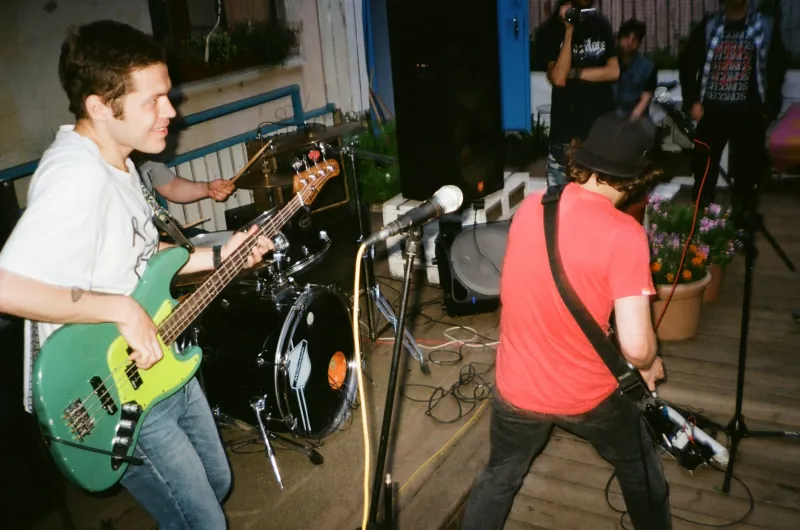
The Varukers have played them all. There was the legendary show — and legendary is being used loosely here — in a venue where the ceiling was so low that the guitarist had to angle the headstock of his guitar sideways just to play without putting a hole in the plasterboard. There was the outdoor stage in the Midlands that wasn't so much a stage as a collection of pallets that started shifting apart from the second song onwards. By the encore, the drummer was essentially playing on a raft.
And then there are the sound issues unique to terrible rooms. That particular reverb you only get in a tiled pub cellar, where every note bounces around for approximately three seconds longer than intended and the vocals arrive slightly after the mouth moves, like a badly dubbed foreign film. Playing tight in that environment isn't just difficult — it's a philosophical challenge.
Hostile Crowds, Bizarre Crowds, and the Occasional Actual Fight
Not every audience is on your side. This is a truth that any touring band learns quickly, and The Varukers have encountered the full spectrum — from the wildly enthusiastic to the openly baffled to the genuinely threatening.
There were the early gigs on bills with bands who had very different audiences, where turning up with a set of furious UK82 hardcore meant facing a crowd who'd come for something considerably more polished and were making their displeasure known from the first power chord. The trick, learned through experience, is to not give them the satisfaction. Play harder. Play faster. By the end, even the hostile ones are either converted or at least grudgingly respectful.
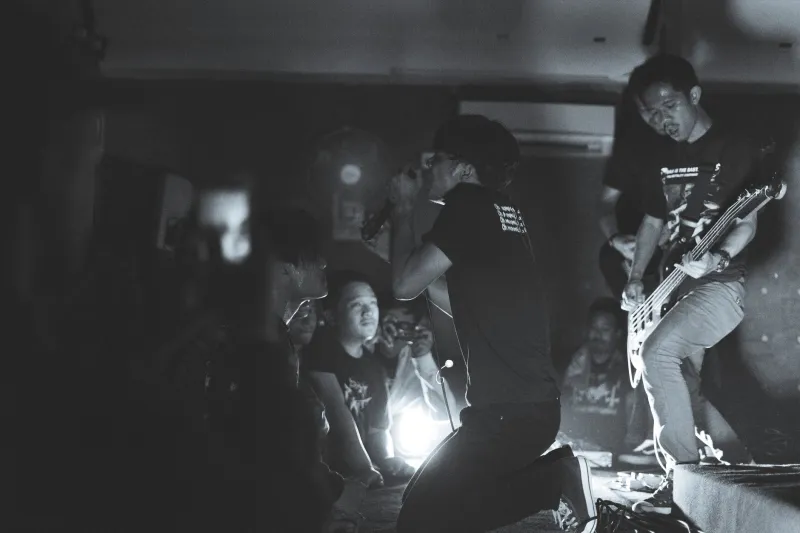
Then there are the fights. Not romantic, cinematic brawls — the reality of a punch-up at a punk gig is considerably less elegant. Someone takes a boot to the head in the pit, tempers flare, and suddenly the band is playing to a crowd that's split between watching the music and watching two blokes argue aggressively near the fire exit. The professional move is to keep playing and let the bouncers — or in smaller venues, whoever happens to be standing nearest — sort it out. The Varukers have kept playing through worse.
The Promoter Problem
If broken gear and dodgy venues are the physical hazards of DIY touring, then the promoter problem is the financial one. The ecosystem of independent gig promotion in the UK is full of genuinely dedicated people who work incredibly hard for very little reward — and also, occasionally, people who have wildly overestimated the draw of their town on a Tuesday night and underestimated how much a band needs to actually cover their petrol.
The classic scenario: you've driven four hours, loaded in, soundchecked, played a blinder, and then the promoter presents you with the door split and it turns out twenty-three people paid in, which after venue hire and the support bands getting their cut leaves you with enough to buy chips on the way home if everyone agrees to share. You've played for the love of it, which is fine, because that's what punk is — but also, the van needs a new tyre.
The Varukers have navigated this reality for decades. The response has never been to chase the bigger fees or play safer venues with guaranteed audiences. It's been to keep building the community, keep showing up, and trust that the people who care about what this band does will be there.
What the Disasters Actually Teach You
Here's what you learn from playing through catastrophe enough times: the show is almost never as ruined as it feels in the moment. The crowd at a punk gig is not there expecting perfection — they're there for energy, for honesty, for the feeling that something real is happening in front of them. A band that keeps going when everything falls apart is delivering exactly that.
The worst gigs become the best stories. The night the PA died entirely and the set finished as a semi-acoustic shout-along. The show where the venue flooded slightly and everyone just moved their feet and carried on. The gig where the van broke down and the band arrived forty minutes late to find the audience had been kept in the room by a DJ playing Discharge records, and were consequently wound up to an absolutely unhinged pitch of enthusiasm by the time the first chord landed.
No Masters, No Mercy — that's not just a slogan. It's a survival strategy for thirty-plus years of playing rooms that didn't always want you there, with gear that didn't always cooperate, for promoters who didn't always come through. The Varukers are still standing not despite the disasters, but in some meaningful way, because of them.