One Song, Thirty Years of Fury: Tracing a Varukers Classic Through Every Era of the Live Set
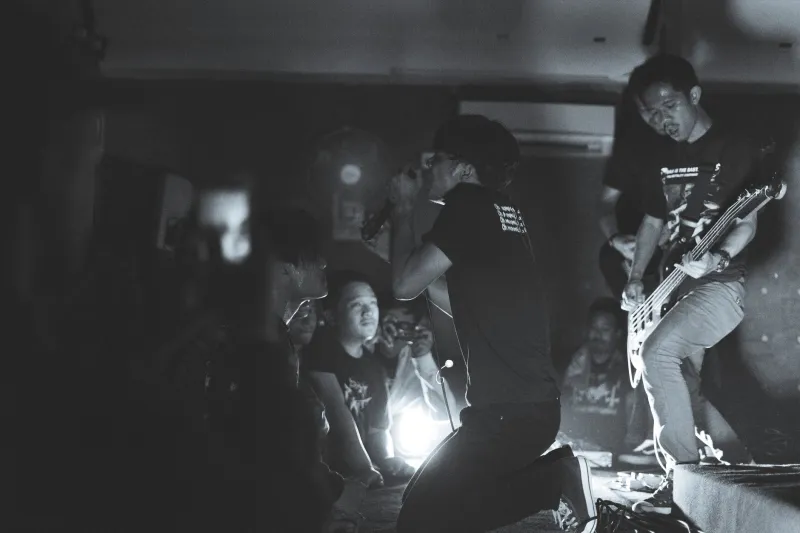
There's a particular kind of magic that happens when a band has been at it long enough that their songs start carrying memories inside them — not just the band's memories, but everyone else's too. Attend enough Varukers gigs over enough years and you'll know exactly what that feels like. The moment the opening chord hits and the whole room seems to exhale, collectively, like everyone present has been waiting for precisely this.
For the Varukers, Soldier Boy is one of those songs. A relentless, two-minute indictment of militarism and working-class conscription, it has appeared in setlists across three decades, through lineup changes, political upheavals, and seismic shifts in what it even means to play punk music in Britain. And in that time, without anyone making a grand announcement about it, the song has quietly transformed.
This is the story of how that happened.
The Early Eighties: Raw, Angry, and Absolutely Necessary
When Soldier Boy first appeared in Varukers setlists in the early 1980s, Britain was not a comfortable place to be young, working class, and politically awake. Thatcher was dismantling the post-war social contract piece by piece. The Falklands War had stirred up a peculiar kind of jingoism that felt suffocating to anyone who saw through it. Punk wasn't just entertainment — it was survival.
In that context, Soldier Boy hit like a fist. Played fast, played loud, barely pausing for breath between verses. Eyewitness accounts from those early gigs — many now passed around on fan forums and zines that have been painstakingly digitised — describe the song as almost confrontational in its directness. No frills, no buildup, just the band and a room full of people who had every reason to be furious.
Mark, now in his late fifties and a longtime fixture of the UK punk scene, remembers seeing the Varukers at a community hall in the Midlands sometime around 1983. "It wasn't even a proper venue," he says. "Plastic chairs pushed to the walls, condensation running down the windows. And when they played Soldier Boy, it felt like the most important thing I'd ever heard. Because it was important. Lads I went to school with were being told that joining up was their best option. That song said what we were all thinking."
The Nineties Interlude: A Song That Refused to Retire
The mid-to-late nineties were complicated for UK punk. The mainstream had largely moved on — Britpop was dominating the cultural conversation, and the raw, uncompromising sound the Varukers had built their reputation on was being squeezed to the margins. Some bands softened their edges. Others disappeared entirely.
The Varukers did neither, but the live performances of Soldier Boy from this period tell an interesting story. Bootleg recordings that circulate among dedicated collectors reveal a slightly slower, heavier delivery — less the sprinting aggression of the early years, more a grinding, deliberate weight. The tempo shift wasn't dramatic, but it was noticeable. The song had started to carry the exhaustion of the decade alongside its anger.
Sarah, who came to the Varukers through the mid-nineties anarcho scene, describes catching them at a squat gig in Bristol around 1996. "It was a different energy to what I'd heard on the older recordings. Slower, but somehow more menacing. Like the anger had settled deeper into the bones of the song. The Britpop stuff felt so hollow by comparison — here were people who'd never stopped meaning it."
Post-2001: Reloaded with New Political Urgency
If any external event recontextualised Soldier Boy for a new generation, it was the post-9/11 rush to war. Suddenly a song about working-class lads being fed into military machines wasn't just historical — it was happening again, live on the news, with fresh faces and different geography but the same fundamental logic. Join up. Serve your country. Don't ask questions.
Varukers performances of Soldier Boy from this era crackle with renewed intensity. The song had found a second wind, and audiences who'd grown up after the Falklands were hearing it for the first time with their own context baked in. Iraq. Afghanistan. Recruitment drives aimed squarely at towns where the factories had closed and the job centre queues stretched around the block.
Dan, who was seventeen when he first saw the Varukers play in 2004, puts it plainly: "I didn't know the history of the song. I just knew it was about me and my mates being seen as cannon fodder. That hit hard. Still does."
The Subtle Craft of Keeping a Song Alive
What's fascinating about tracking Soldier Boy across these eras is that the Varukers never made a show of reinventing it. There were no acoustic versions, no orchestral reimaginings, no press releases announcing a bold new interpretation. The changes were organic — the product of a band responding, consciously or otherwise, to the world around them and to the rooms they were playing in.
The tempo has ebbed and flowed. The guitar tone has shifted with different gear and different rooms. The crowd response has changed the energy of the delivery in ways that are hard to quantify but impossible to miss on recordings. At some gigs, the song is greeted with immediate, frenzied recognition. At others — particularly where younger audiences dominate — there's a brief moment of discovery before the room catches up. Both are valid. Both are part of the song's ongoing life.
This is, arguably, what separates bands with genuine staying power from those who simply repeat themselves. The Varukers have never treated their back catalogue as a museum exhibit. The songs exist in the present tense, shaped by whoever is in the room on any given night.
What the Fans Carry With Them
Speak to enough people who've followed the Varukers across multiple decades and a pattern emerges. Each generation has their version of Soldier Boy — the one they heard first, the one that meant the most, the one that felt like it was written specifically for their particular moment of political despair.
Mark's version belongs to Thatcher's Britain. Sarah's to the hollowed-out nineties. Dan's to the war on terror. And the lads and lasses who are catching the Varukers now, in an era of food banks, crumbling public services, and a government that seems to view working-class communities as an inconvenience, are adding their own layer to the song's history.
That accumulation of meaning is what punk, at its best, has always been capable of. Not nostalgia — the opposite of nostalgia. A song that refuses to become a relic because the conditions that created it refuse to go away.
Still Playing, Still Meaning It
The Varukers have never been interested in legacy in the self-congratulatory sense. They don't do anniversary tours with elaborate stage setups or retrospective box sets aimed at people who want to feel good about their youth. They play gigs because the music still has somewhere to go.
Soldier Boy, thirty-odd years on, is proof of that. Every time it appears in a setlist, it brings the past into the room — but it doesn't live there. It lives in whoever is hearing it for the first time, or the fiftieth time, and finding something in it that speaks to right now.
That's not archaeology. That's a song doing its job.