The Ink Never Dries: Reading The Varukers' History Through a Tatty Paper Trail
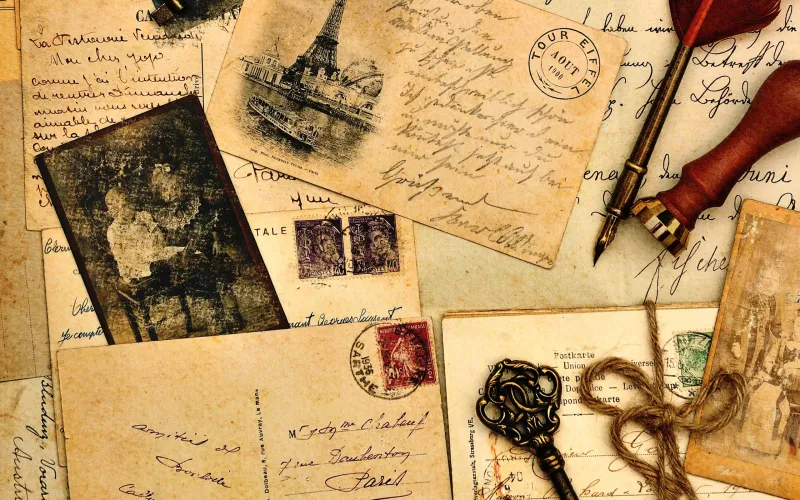
Photo: vintage photocopied punk gig flyers and fanzines pinned to a wall, via wallpapercave.com
Every band gets a history written eventually, usually by someone with a book deal and a selective memory. The Varukers got theirs written by whoever had thirty pence for the photocopier and a grudge against the venue's landlord.
That's the thing about the paper trail around this band: nobody commissioned it. It was assembled by people sitting on bedroom floors at one in the morning with a Pritt Stick, a copy of the local listings and a felt-tip that was already going dry. And somehow it survived — in shoeboxes, folded into record sleeves, blu-tacked inside a wardrobe door in Selly Oak. If you want the real history of grassroots UK punk, you don't start at the museum. You start in somebody's mum's loft.
Thirty pence a sheet and a room to fill
A flyer in the late seventies and early eighties was an act of economic optimism. You were skint, you were signing on or close enough, and you were being asked to conjure an audience out of thin air on a wet Tuesday in Balsall Heath. The going rate at the local print shop was pennies a sheet if you brought your own paper and didn't mind the machine chewing the corner off every third page.
The design language came out of that constraint, not out of art school. Letraset rub-down lettering, half of it applied crooked because your hand slipped. Ransom-note headings cut from newspapers. Great slabs of black, because black toner was the only thing that reproduced reliably on a copier that hadn't been serviced since the Silver Jubilee. Bands learned fast that a solid block gave you texture and a fine line gave you mush. Every over-inked flyer with the ghost of a drum kit bleeding through the paper is a lesson in graphic design learned the hard way, at the counter, with a queue behind you.
A flyer is a claim on a room
The function was obvious — tell people where to be and what it costs — but the handbill did far more work than that. It was a promise, and promises in punk were load-bearing. If the sheet said DOORS 8 or SUPPORT TBC or the wonderfully optimistic ALL WELCOME, somebody was sticking their neck out. A badly stapled A5 taped above the bar was a public bet that forty people would turn up, and the band would play like it mattered whether they did.
The best of them are also accidentally hilarious. The crossings-out. The over-stickered corrections where the date shifted. The venues that no longer exist, listed in handwriting that suggests the person doing it was already late for a bus. You can read an entire ecosystem off one sheet: the support acts who never made it past the second support slot, the ticket price that dates it to the exact year, the phone number with one digit too few.
The fanzine interview as a time capsule
Then there's the other half of the paper trail — the stapled zines with the pages in the wrong order and the interview that runs two pages too long because the tape kept rolling and nobody wanted to be the one to stop it. Fanzine writers had no press officer to negotiate with, so they asked the questions a press officer would have strangled at birth. About money. About the label. About why the setlist had changed. About whether the band actually believed what they were shouting.
What comes through in those interviews, decades on, is how little performance there was in the answers. These weren't media-trained people. They were knackered, funny, occasionally defensive, and honest in a way that now reads as almost recklessly open. The fanzine didn't get the polished version because the polished version didn't exist yet. It got the version that had just come off stage and wanted a cup of tea.
The archive nobody thought to keep
Here's the problem with paper history: institutions keep the master tapes and the contracts. Nobody archives the flyer. It's the most disposable artefact punk ever produced, which is exactly why the surviving ones carry so much weight — and why, yes, they now turn up on auction sites at prices that would have bought a week's shopping in 1981.
Because the official story gets written from the centre outwards, and the paper trail tells it from the room backwards. It records the cancelled gigs, the venues that lasted six months, the benefit nights, the plug pulled at half ten because the neighbours complained. It is a counter-archive assembled by people who had no idea they were assembling one, and it's far more truthful than a discography.
Put your shoebox online
So here's the ask, and it's a serious one. If you've got a shoebox — and if you were there, you've got a shoebox — photograph the lot. Flat, daylight, no flash, front and back. Write down what you remember about the night while you still remember it, because the flyer will outlast the memory of why you kept it.
Punk heritage projects and local music archives up and down the country are quietly doing this work with no funding and no fanfare, and they will take your scans. A band's legend doesn't live in the reviews, anyway. It lives in the fact that somebody kept a badly stapled piece of paper for forty-six years because the night it advertised changed their week. That's the archive. Copy it, share it, give it away.