Wrong Copies, Right Spirit: The Bootleg Underground That Made The Varukers Immortal
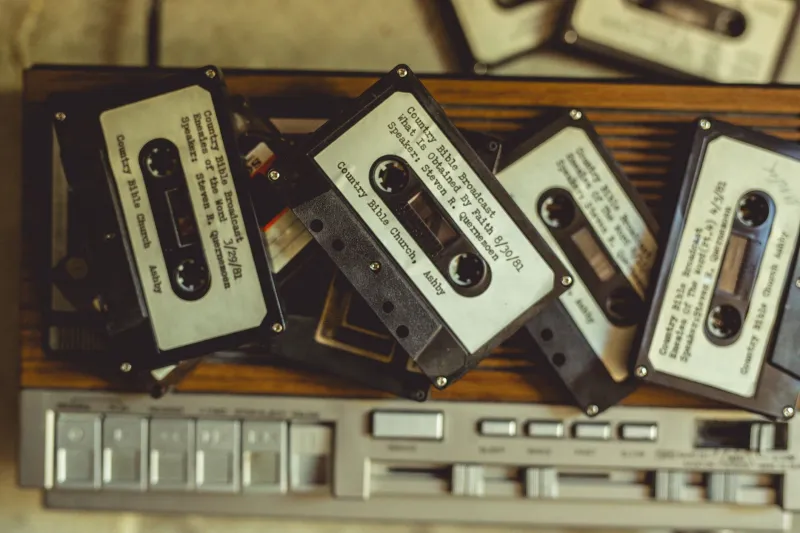
There's a cassette tape sitting in a box somewhere in the East Midlands. The label is handwritten in biro, slightly smudged, the inlay a photocopied mess of cut-and-paste lettering that someone clearly did on a kitchen table at midnight. The sound quality is genuinely terrible — thin, overdriven, with a persistent hiss that never quite goes away. And to the person who owns it, it is absolutely priceless.
This is what punk distribution looked like before the internet. Before Bandcamp, before streaming, before any of that. You wanted the music, you found a way to get the music. And for a generation of UK punk fans in the early 1980s, getting The Varukers meant navigating a sprawling, entirely unofficial network of traders, collectors, and obsessives who kept the music moving through sheer bloody-mindedness.
The Tape Circuit
The hand-dubbed cassette was the lifeblood of the early UK punk underground, and The Varukers were among its most circulated currency. Before Die for Your Government had proper distribution, before One Struggle One Fight was stocked in any shop worth mentioning, the music existed primarily as copies of copies of copies — each generation slightly worse than the last, each one passed along with the same urgent recommendation: you need to hear this.
The mechanics were straightforward. Someone would get hold of a source recording — sometimes a demo, sometimes a live tape recorded on a handheld machine at the back of a sweaty venue, sometimes a reel-to-reel dub from someone who knew someone in the band. They'd copy it onto a C90, write out a tracklisting if they were feeling generous, and pass it on. The recipient would do the same. Within months, a single source recording could be circulating in dozens of towns across the country, each copy carrying the sonic fingerprints of every machine it had passed through.
The punk fanzine network accelerated all of this. Ads in the back pages of photocopied zines offered tape trades — send blank + SAE, will dub anything in my collection — and the postal system became a kind of punk infrastructure, moving music between Coventry and Glasgow, between Bristol and Newcastle, stitching together a national community that had no other means of connection.
Unofficial Vinyl and the Art of the Bootleg Press
Cassettes were one thing, but the real collectors' holy grails were the unofficial vinyl pressings — small runs, often fewer than a few hundred copies, pressed up by entrepreneurial types operating at the fringes of legality. These weren't sanctioned. Nobody asked the band. Nobody sent royalties. But they filled a genuine gap: the demand for Varukers material consistently outstripped what official channels could supply, and where demand exists in punk, someone will always find a way.
These pressings were identifiable by their imperfections. Labels slightly off-centre. Sleeves that didn't quite fit. Occasionally, track orders that differed from the official release — either through error or because the person who made the thing was working from a different source tape and didn't know any better. Far from diminishing their value, these quirks became part of the appeal. A bootleg pressing wasn't just music; it was evidence. Proof that the underground had moved before the mainstream caught up.
Collectors who spent years hunting these artefacts developed an almost forensic knowledge of the variants. Which pressing had the slightly different running time on track three. Which one had the alternate mix that appeared nowhere else. The obsession ran deep, and it still does — online forums dedicated to UK82-era punk still see threads debating the provenance of particular pressings, with photos of matrix etchings posted as evidence.
What the Collectors Understood
Speak to anyone who was deep in this world and they'll tell you the same thing: the bootlegs felt more real. That's not just nostalgia talking. There was something about the unofficial copy — the one that existed because someone wanted it to exist, not because a label had calculated its commercial viability — that carried an authenticity the proper releases sometimes struggled to match.
The Varukers were a band whose entire ethos was built around refusing the terms the mainstream offered. No masters, no mercy — that wasn't just a slogan, it was a description of how they operated. And the bootleg network embodied exactly that refusal. Nobody was making money. Nobody was building a brand. The music moved because people believed in it, full stop. The medium and the message were perfectly aligned.
There's also something to be said about the effort involved. Getting hold of a Varukers tape in 1983 required actual work — writing letters, sending blank cassettes through the post, turning up to gigs with a list of wants and a willingness to trade. The friction was the point. You couldn't passively consume this music. You had to actively pursue it, and that pursuit created investment. By the time you finally heard the recording you'd been chasing for months, you were already a true believer.
The Traders Who Kept It Alive
Behind all of this were individuals who operated as informal archivists — people who understood, even then, that they were preserving something important. Some of them ran distros out of their bedrooms, advertising in zines and at record fairs. Others were simply obsessive collectors who happened to be generous with their duplicating equipment.
Many of them are still around, still sitting on collections that represent a genuinely irreplaceable archive of UK punk's formative years. Some have digitised their holdings and shared them online, extending the original spirit of the tape circuit into the twenty-first century. Others guard their collections fiercely, reluctant to see the physical artefacts reduced to mere data.
What unites them is the understanding that what they were doing was never really about The Varukers specifically — it was about a principle. Music belongs to the people who need it. Distribution is a political act. The official version is just one version.
Legacy in the Wrong Copies
The irony isn't lost on anyone who thinks about it seriously. The Varukers built a significant chunk of their early cult status on recordings they didn't authorise, pressed by people they didn't know, circulated through networks they had no control over. By any conventional measure, this should have been a problem. Instead, it was a foundation.
Because the bootleg underground didn't just distribute the music — it created the mythology. Every degraded copy, every off-centre label, every tape that had been dubbed so many times the high end had completely disappeared was a node in a network that said: this band matters. This music is worth the effort of preservation. The wrong copies, passed hand to hand through the postal system and across sticky pub floors, turned The Varukers from a band into a cause.
That's not something you can manufacture. That's not something a marketing budget buys. That's what happens when the music is right and the people who find it refuse to let it disappear.
The hiss on that cassette in the East Midlands? That's not a flaw. That's history.