Fractions of a Penny: What Streaming Actually Pays and Why The Varukers Aren't Waiting on Spotify
Photo: Unknown, Public domain, via Wikimedia Commons
Let's start with the numbers, because the numbers are the point.
Spotify pays somewhere between £0.002 and £0.004 per stream — depending on which report you read, which territory the listener is in, and how many layers of distributor and label take their cut before anything reaches the artist. That's roughly a third of a penny. Sometimes less. You need somewhere in the region of 250,000 streams just to clear minimum wage for a single month. For a single month.
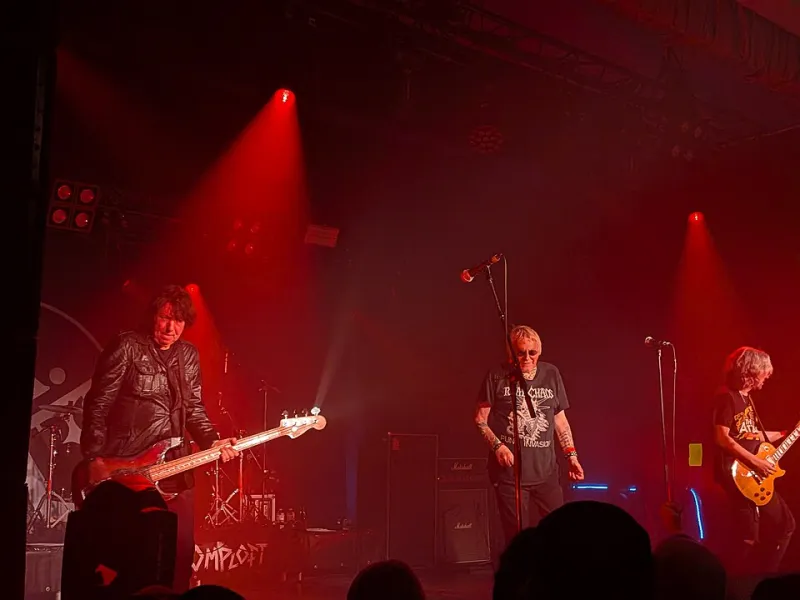
Now consider what The Varukers pull in on a decent Friday night at a packed venue. Even a modest door split at a 200-capacity room, with tickets at a tenner a head and a fair arrangement with the promoter, puts real, spendable money in hand before last orders. Not theoretical royalty accumulations that arrive quarterly, filtered through a distributor's dashboard. Actual cash that buys the diesel to reach the next town.
That contrast isn't incidental. It's the whole argument.
The Royalty Trap Nobody's Talking About Honestly
The streaming conversation in the music press tends to focus on the big picture — Taylor Swift pulling her catalogue, Thom Yorke calling Spotify the last desperate fart of a dying industry, various indie labels publishing open letters. What gets discussed less is how uniquely terrible the streaming model is for a band operating at the grassroots level of UK punk.
Major label artists, at least in theory, have the volume. Their catalogue gets pushed, playlisted, and algorithmically recommended because the label has leverage with the platform. They're still getting robbed, but they're getting robbed at scale. A punk band with a loyal but niche following gets neither the scale nor the leverage. They get the same fraction-of-a-penny rate, with none of the promotional machinery that might at least generate enough streams to make the pittance add up.
There's also the question of who actually owns the relationship with the listener. When someone streams a Varukers track on Spotify, Spotify owns that interaction. They know who the listener is, what else they played, where they are, how old they are. The band gets a number on a dashboard and a bank transfer that barely covers a tank of petrol. The platform has built a commercial asset from your music. You've received a rounding error.
Why Punk Specifically Has Always Been Suspicious of This
Punk's relationship with the mainstream music industry has never been comfortable, and that's not an accident or a pose. The DIY ethic that defined UK punk from the late 1970s onward — pressing your own seven-inches, booking your own tours, running your own label out of a bedsit — was a direct response to watching the industry absorb, dilute, and monetise everything it touched.
Streaming platforms are, in many ways, the industry in its most evolved extractive form. They've managed to create a system where the infrastructure is digital rather than physical, the overheads are lower than any pressing plant, and yet the power dynamic remains entirely in the platform's favour. You need them. They don't particularly need any individual artist. There are 100,000 tracks uploaded to Spotify every single day. You are not scarce. Your leverage is zero.
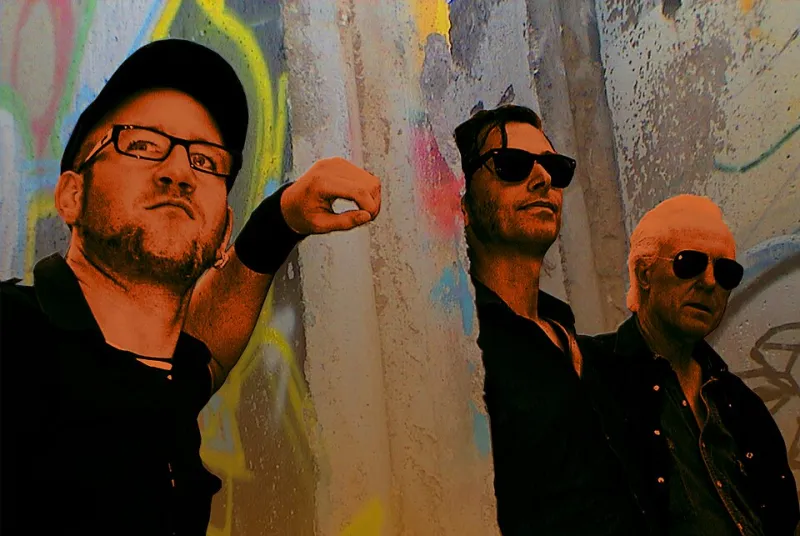
For The Varukers, who've been navigating the music industry's attempts to commodify punk since the early 1980s, this isn't a new problem with a new name. It's the same problem wearing a Silicon Valley fleece.
The Physical Release as a Political Statement
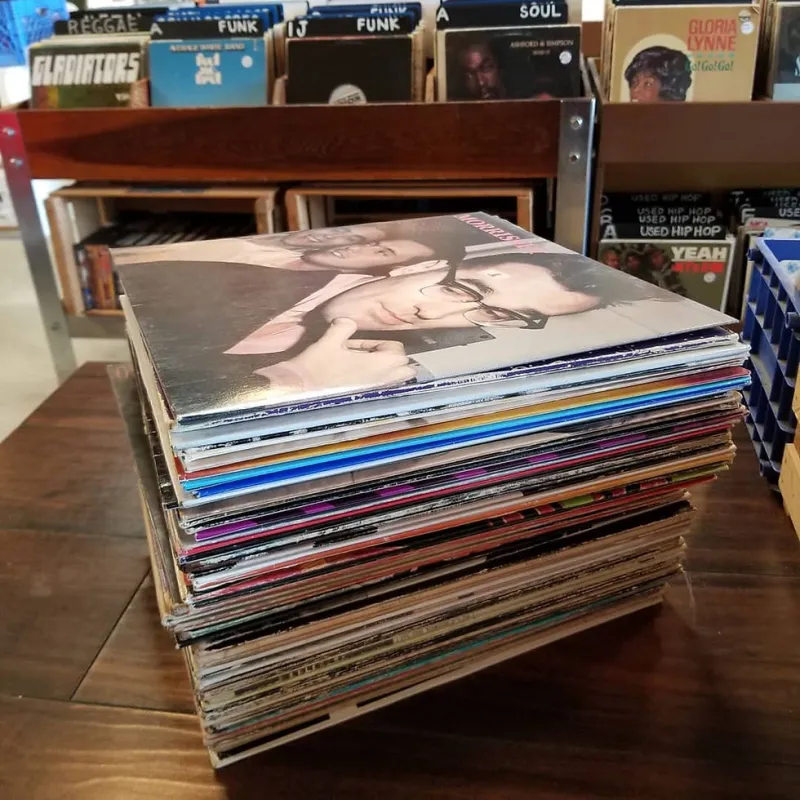
When The Varukers put out a record on vinyl or CD — through labels like Radiation Records or via direct mail order — something fundamentally different happens. The person buying it is making a deliberate choice. They're paying a fair price for a physical object. The margin is honest. There's no algorithm deciding whether your release gets visibility. There's no quarterly dashboard. There's a record, and there's someone who wanted it enough to pay for it properly.
This isn't nostalgia. Well — it might be a bit, and there's nothing wrong with that — but it's also a coherent economic strategy. The markup on a vinyl pressing, even accounting for manufacturing costs, is vastly more favourable than streaming royalties at any realistic volume. A run of 500 records sold direct at £20 a piece generates £10,000 in gross revenue. You'd need somewhere north of 2.5 million streams to approach that figure on Spotify, after everyone else has taken their percentage.
Merch at gigs follows the same logic. A patch, a t-shirt, a record sold at the table after a set — these are transactions between the band and a fan, with nothing in between extracting value from the exchange. The intimacy is the point. The economics are better. The relationship is real.
What 'Resistance' Actually Looks Like in Practice
It would be easy to frame The Varukers' approach to streaming as a kind of principled stubbornness — old punks refusing to engage with modernity. That reading is both lazy and wrong. The decision to prioritise live revenue, physical sales, and direct fan relationships over playlist placements isn't a failure to adapt. It's an accurate assessment of where the value actually lies.
Bands that chased streaming numbers in the early 2010s, convinced that digital ubiquity was the future, largely discovered that ubiquity without revenue is just exposure. And as the old saying goes, you can't eat exposure. You can't fill a van with it. You can't pay a sound engineer with it.
The Varukers have always understood something that took the broader industry years to reluctantly acknowledge: the gig is the product. The record is the advertisement. The relationship between band and audience, built in sweaty rooms over decades, is the actual asset — and no streaming platform can own it, monetise it, or take a percentage of it.
That's not stubbornness. That's just knowing how the game works and refusing to play the version that's rigged against you.
The Bigger Picture
None of this means streaming is irrelevant. Younger listeners discover music through Spotify and Apple Music. YouTube algorithms have introduced The Varukers to people who'd never have wandered into a record shop or caught a flyer on a lamp post. Discoverability matters, and pretending otherwise would be its own kind of dogma.
But discovery and revenue are two different things, and conflating them is exactly what the platforms want you to do. You can use streaming as a shop window — a way for new ears to find you — while being clear-eyed about the fact that the window display isn't the business. The business is the gig, the record, the patch, the handshake at the merch table.
For a band like The Varukers, that distinction isn't academic. It's the reason they're still standing.