No Wristbands, No Sponsors, No Problem: Why The Varukers Have Always Built Their Own Stages
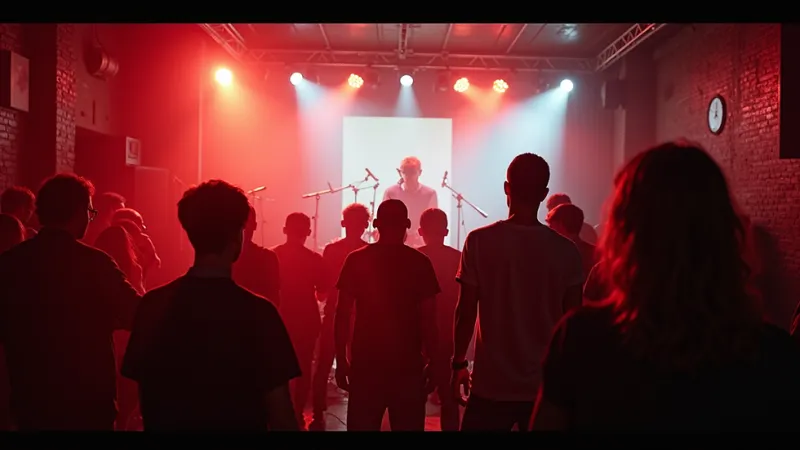
Photo: underground punk gig small venue crowd UK, via static.wixstatic.com
There's a particular kind of festival email that does the rounds every spring. Some mid-tier booking agent, working on behalf of a festival that's half-funded by a lager brand and half-funded by a streaming service nobody uses, fires off a speculative offer to a band's management. The fee is modest. The billing is buried. The rider includes one warm crate of something you didn't ask for. And somewhere in the small print, there's a clause about social media content, brand alignment, and not saying anything that might upset the sponsors.
The Varukers have never needed to read that email twice.
For a band that built its identity on the phrase "no masters, no mercy," the festival circuit — at least the corporate end of it — has always felt like someone else's game. And rather than play it badly, they've consistently refused to play it at all.
The Festival Trap Nobody Talks About
Here's the thing about major UK festival appearances that the music press tends to gloss over: they're not neutral. When a band agrees to appear at a festival underwritten by a multinational drinks company or a tech giant running a branded stage, they're lending their credibility to something that operates on entirely different values. For most bands, that's a compromise they're willing to make. For The Varukers, it's never been a trade worth making.
And it's not just ideological. Practically speaking, the festival model strips bands of almost every variable they'd otherwise control. Set times are dictated by someone else's schedule. Sound engineers are unfamiliar with your material. The crowd is a mixed bag of people who wandered over from the previous act. The stage itself is branded with someone else's logo. You're a content unit in a weekend-long entertainment product, and the audience knows it, even if they can't quite articulate why it feels slightly hollow.
Punk has always been at its worst when it's been most comfortable. The Varukers understood that early, and they've never stopped understanding it.
Grassroots or Nothing
What The Varukers have done instead is something far less glamorous and considerably more effective: they've built their own infrastructure. That means working with independent promoters, booking themselves into venues where the ceiling is low and the PA is held together with gaffer tape and optimism, and creating events where every decision — from the support acts to the ticket price — stays within the band's orbit.
This isn't nostalgia. It's not a refusal to grow up or a romanticisation of poverty. It's a recognition that the rooms where punk actually lives — the social clubs, the arts centres, the sticky-floored venues in Coventry, Leeds, Bristol, and Glasgow — are where the music means something. Not because small is inherently virtuous, but because small is where you can still feel the thing that made you care about punk in the first place.
When The Varukers play a self-organised gig, there's no brand ambassador hovering near the merchandise table. There's no activation zone. Nobody's being asked to scan a QR code for a chance to win something. There's just the band, the crowd, and whatever happens when those two things collide in a room without airbrushed banners blocking the sight lines.
The Fanbase Stays Theirs
This approach also does something that's easy to underestimate: it keeps the relationship between the band and their audience direct. When you route everything through a festival promoter, a corporate sponsor, and a ticketing platform that charges more in fees than some bands earn on the door, you're inserting a series of middlemen between yourself and the people who actually give a damn about your music.
The Varukers' fanbase isn't an audience demographic. It's not a target market. It's a community that's been built over decades through shared experience — through turning up to the same sweaty rooms, through trading records and patches, through the kind of loyalty that only comes from a band that's never tried to sell you something you didn't want.
That community doesn't survive contact with corporate festival culture particularly well. The moment a punk band becomes a festival act, something shifts in how they're perceived — not always dramatically, but enough. The context changes. The meaning changes. And the people who found the band precisely because it existed outside mainstream entertainment channels start to wonder whether it still does.
Bigger Stages Don't Make Better Art
There's an assumption baked into the music industry's value system that scale equals legitimacy. That playing to more people is always better. That a slot at a major festival is an unambiguous step forward. It's an assumption that The Varukers have spent their entire career quietly demolishing.
Because the truth is, the best punk music has almost never come from the biggest stages. It's come from situations where the stakes were personal, the conditions were uncomfortable, and the people in the room had chosen to be there specifically for this, not as part of a broader weekend experience. The Varukers' most ferocious performances haven't happened in front of festival crowds of thousands. They've happened in front of two hundred people who knew every word and meant every one of them.
That's not a consolation prize. That's the actual prize.
Autonomy as a Political Act
It's worth being explicit about something: for a band whose lyrics have always engaged directly with power, capitalism, and the machinery of control, the decision to stay off the corporate festival circuit is itself a political statement. It's not separable from the music. It's continuous with it.
The Varukers have spent forty-odd years writing songs about refusing to be controlled, about the violence of systems that prioritise profit over people, about the importance of standing outside the structures that want to absorb and neutralise dissent. Playing on a stage sponsored by one of those structures would be, to put it plainly, a bit inconsistent.
So instead, they build their own stages. Or they find people who build them in the same spirit. And they keep showing up to rooms where nobody's checking whether the content aligns with brand values, because the content is the point, and the brand is irrelevant.
The Model That Actually Works
There's a practical argument here too, beyond the ideological one. Bands that maintain control over their own gigging infrastructure are less vulnerable to the whims of the festival industry, which is notoriously volatile. Festivals cancel. Budgets collapse. Lineups get reshuffled. Bands that have built their own grassroots touring network aren't dependent on any of that.
The Varukers can announce a run of dates tomorrow and know that the people who want to come will find out, will turn up, and will make it worth doing. That's a kind of resilience that no festival slot can provide, because it's built on something the festival circuit can't manufacture: genuine, durable trust between a band and the people who've followed them across decades.
No wristbands required. No sponsors in sight. Just the music, the room, and the understanding that this is how it's always been done when it's been done properly.
That's not a rejection of ambition. That's what ambition looks like when it hasn't been domesticated.