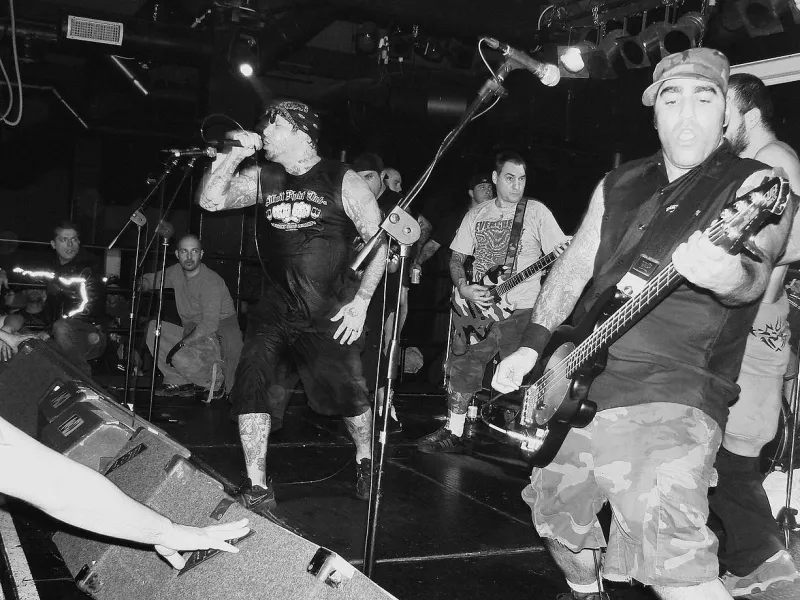
Off the Turntable: The Records That Actually Raised The Varukers
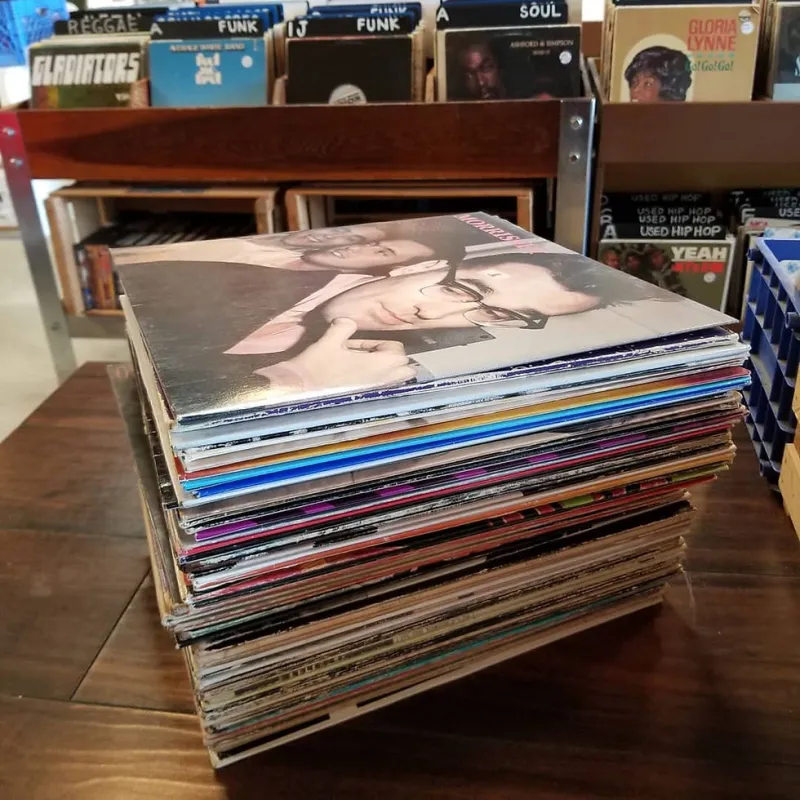
Photo: vinyl record collection punk reggae post-punk albums turntable close up, via static.wixstatic.com
Ask most people what The Varukers listen to and they'll probably guess Discharge, GBH, Crass — the usual suspects. And fair enough, those names belong in the conversation. But anyone who's spent real time around the band, or paid close attention to the textures underneath the noise, will know that the record collection runs considerably deeper than that.
Music doesn't form in isolation. Every band is, on some level, a sum of what its members absorbed before they ever plugged in. With The Varukers, that absorption happened in a specific time and place — working-class Coventry in the late seventies, a city where different musical cultures were colliding constantly, where the corner shop might have reggae coming out of one window and something rougher and angrier coming out of another. That collision is audible in the music, if you know what you're listening for.
The Punk Foundation — But Not the Obvious Bits
Let's get the obvious out of the way first, but with a bit more precision than usual. Yes, the first wave of UK punk was formative. But within that, it's worth being specific about which bits landed hardest.
It wasn't necessarily the polished end of things. The Clash's major label output had its moments, but what really mattered was the rawer, more confrontational stuff — the early singles, the stuff recorded before anyone had figured out how to make punk sound presentable. The Damned's debut album, Damned Damned Damned, recorded in a matter of days, still sounds like it might fall apart at any moment. That structural instability, that sense of controlled chaos, is exactly what The Varukers were chasing.
Discharge deserve their own paragraph because their influence on The Varukers is not subtle. Hear Nothing See Nothing Say Nothing is one of the most important British records ever made — a relentless, apocalyptic document that stripped rock music down to its absolute essentials and then kept stripping. The Varukers heard that record and understood something fundamental about what hardcore could be.
Reggae and the Sound System Legacy
Here's where it gets interesting. Coventry in the late seventies was one of the most significant cities in the UK for the cross-pollination of punk and reggae. The city had a substantial Jamaican and Caribbean community, and the sound system culture that had developed there was a genuine presence in everyday life — in the streets, in the youth clubs, at the parties.
For young white working-class kids getting into punk, this wasn't exotic. It was just the music that was around. The political edge of roots reggae — the Babylon-burning fury of artists like Burning Spear, Culture, and Steel Pulse (who were, crucially, a Birmingham band, practically neighbours) — resonated directly with the anti-establishment anger that punk was channelling. Different sounds, identical targets.
The influence shows up in The Varukers' work in ways that aren't always immediately obvious. There's a rhythmic weight to some of their material that goes beyond straightforward hardcore — a sense of groove underneath the aggression that comes from having grown up listening to music with a serious low end. Punk and reggae were always closer than the history books suggest, and The Varukers are part of that story.
Post-Punk's Dark Architecture
While the hardcore scene was developing its own momentum, something else was happening in British music that left its mark. Post-punk — the wave of bands that emerged after the initial punk explosion and pushed the form into stranger, darker territory — provided a different kind of education.
Joy Division are the obvious reference point, and their shadow falls across a lot of British music from this period. But it's worth mentioning the less-celebrated end of the post-punk spectrum too. The Fall's relentless, motorik grind. Killing Joke's apocalyptic tribal fury. Bauhaus at their most abrasive. These weren't punk bands in the strict sense, but they were operating with the same anti-commercial, anti-establishment energy, and they were exploring sonic territory that hardcore hadn't mapped yet.
The Varukers absorbed this atmosphere. It's there in the bleakness of some of their lyrical content, in the way certain tracks build a sense of dread rather than just aggression. Pure noise is one thing. Noise that makes you feel like the walls are closing in is something else entirely, and post-punk showed how to get there.
Working-Class Folk and the Art of the Political Song
This one might raise a few eyebrows, but stay with it. The tradition of British working-class folk music — from the industrial ballads of the nineteenth century through to the politicised folk revival of the sixties and seventies — is a direct ancestor of what The Varukers do, even if the sonic distance between them is considerable.
Billy Bragg is the obvious bridge figure, but he's drawing on a tradition that goes back through The Clash's storytelling instincts, through the Angry Brigade-era punk folk of artists like Leon Rosselson, through the miners' songs and protest ballads that working-class communities used to document their own experiences when nobody else was going to do it for them.
The Varukers' lyrics aren't abstract. They're specific, grounded, rooted in actual conditions — unemployment, state violence, nuclear anxiety, the grinding reality of poverty. That's the folk tradition, even when it's being delivered at 200 beats per minute over a wall of distortion. The form changes. The impulse doesn't.
What the Record Collection Tells Us
So what does all of this add up to? It tells us that The Varukers didn't arrive at their sound through a single, narrow lineage. They came at it from multiple directions simultaneously — punk's confrontational energy, reggae's political weight and rhythmic depth, post-punk's atmospheric darkness, folk's commitment to telling the truth about working-class life.
That eclecticism isn't a weakness. It's precisely what gives the music its density and staying power. Bands that draw from a single well tend to exhaust it relatively quickly. Bands that have genuinely wide-ranging tastes — even if those tastes aren't always visible on the surface — keep finding new things to say.
The records that raised The Varukers are, in the end, a map of a particular cultural moment: working-class Britain in the late seventies, when everything felt like it was collapsing and the music reflected that honestly. That moment is over, but the records survive. And so does the band that they helped create.