Rage Inherited: The UK Punk Bands Keeping The Varukers' Fire Burning in 2024
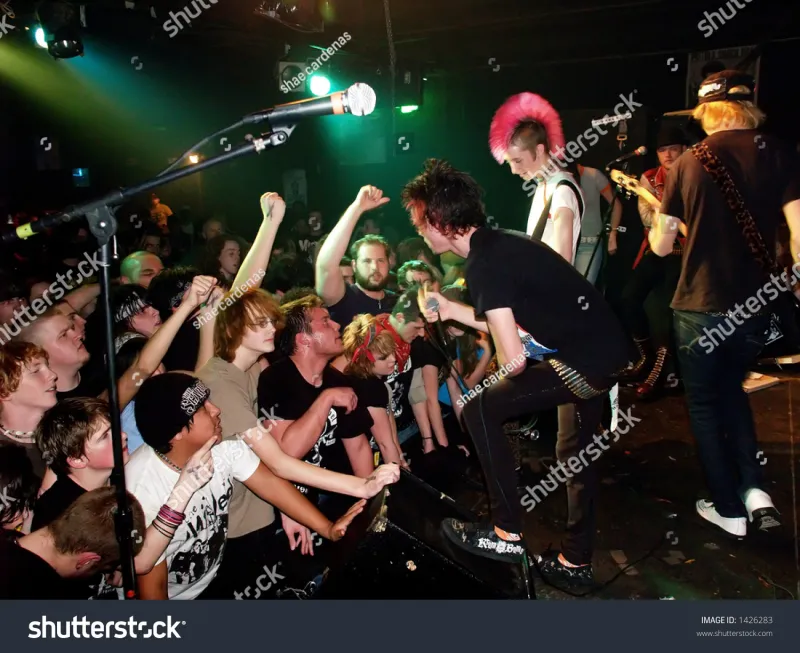
Photo: young UK punk band performing live show crowd moshing, via image.shutterstock.com
Let's be honest about something. 'Punk' gets thrown around so casually these days that it's almost lost its teeth. You'll see it applied to overpriced festival headliners, major label signings with carefully managed social media personas, and bands whose idea of rebellion is wearing a ripped jacket they bought from ASOS. That's not punk. That's cosplay.
The Varukers were never cosplay. They were the genuine article — raw, political, and utterly indifferent to mainstream approval. So when we talk about who's carrying that torch in 2024, we need to be rigorous. The bar is high. The 'No Mercy' mentality isn't a brand — it's a way of operating.
With that said, the UK punk scene isn't dead. Far from it. There are bands out there right now who understand what The Varukers understood: that punk is only meaningful when it's connected to real politics, real communities, and a real refusal to be absorbed by the machine. Here's our take on who's doing it properly.
What Does 'Carrying the Torch' Actually Mean?
Before we get into specific names, let's establish what we're actually looking for. Being influenced by The Varukers isn't just about D-beat rhythms or shouted vocals, though those things matter. It's about the totality of the approach.
DIY infrastructure? Tick. Political commitment that goes beyond vague gestures? Tick. A relationship with their audience that's genuinely reciprocal rather than transactional? Tick. Willingness to play benefits, support causes, and use their platform for something beyond self-promotion? Absolutely essential.
The Varukers didn't just make music that sounded a certain way — they built a way of existing in the world. The bands worth discussing here are the ones who've internalised that.
Casual Nausea — Grim Northern Realism
If you haven't encountered Casual Nausea yet, sort that out immediately. This Leeds-based outfit operate with an intensity and political clarity that feels unmistakably connected to the tradition The Varukers helped establish. Their lyrics tackle austerity, institutional racism, and the grinding reality of working-class life in post-Brexit Britain with a directness that's genuinely bracing.
Crucially, they back it up with action. Regular benefit gigs, transparent band finances, and a commitment to accessible ticket pricing aren't incidental to what they do — they're central to it. That's the Varukers ethos in practice: the music and the politics aren't separate things.
Sonically, there's a rawness to their recordings that suggests they've consciously resisted the temptation to over-produce. It sounds like it was made by people who are angry, because it was.
Autonomads — Folk-Punk's Political Conscience
Okay, Autonomads aren't a straightforward hardcore act — but dismissing them on those grounds would be missing the point. Based in Sheffield, they blend folk instrumentation with punk energy and a political sophistication that matches anything The Varukers produced lyrically.
What connects them to the Varukers lineage isn't sonic similarity but ideological kinship. Autonomads are deeply embedded in activist networks, they play benefits constantly, and their music is explicitly about power, resistance, and solidarity. They've played alongside anarchist groups, environmental campaigns, and anti-fascist organisations in exactly the way The Varukers did in the '80s.
The argument that punk has to sound a specific way to count is, frankly, a conservative position. The Varukers would have understood that the spirit matters more than the genre tag.
Witch Hunt — Unapologetic Hardcore
For those who want the uncut hardcore experience, Witch Hunt are worth your attention. Operating with a ferocity that owes a clear debt to the UK hardcore tradition The Varukers helped define, they've built their reputation entirely through relentless gigging and genuine community engagement.
Their approach to touring is properly DIY — house shows, community centres, independent venues — rather than the 'DIY aesthetic applied to major label infrastructure' that passes for independent in some quarters. There's a difference between looking underground and actually being underground, and Witch Hunt are firmly in the latter camp.
Does the Current Scene Compare to the Varukers' Era?
This is where it gets genuinely complicated, and we want to spark some debate here. The political conditions that produced The Varukers — Thatcherism, the miners' strike, mass unemployment, the constant nuclear threat — were uniquely galvanising. There's an argument that extreme adversity produces extreme art, and that the relative comfort of subsequent decades dulled punk's edge.
But look at Britain in 2024. Fourteen years of Tory government. A cost of living crisis that's hammering working-class communities. A political class that seems constitutionally incapable of addressing structural inequality. A media environment that actively works to suppress dissent and divide working people against each other. The conditions for furious punk rock are, if anything, more acute than they were forty years ago.
The difference is that the channels for that fury are more fragmented. Social media dissipates anger in ways that the squat circuit never did. Streaming platforms create the illusion of community without the substance. The challenge for contemporary punk isn't finding things to be angry about — it's building the kind of durable, real-world networks that give that anger somewhere to go.
The Bands We're Watching
Beyond the acts already mentioned, there are others worth keeping an eye on. The UK's provincial cities — always more fertile ground for genuine punk than London, historically — are producing interesting things. Birmingham, Manchester, Bristol, Glasgow: the tradition of punk as a specifically working-class, community-rooted practice is alive in these places in ways that don't always make it onto the wider radar.
We'd encourage anyone reading this to seek out their local scene actively. Go to the small gigs. Buy the self-released records. Talk to the bands. The Varukers didn't build their community by waiting for people to come to them — they went everywhere, played for everyone, and treated every show as if it mattered. Because it did.
Have Your Say
This is very much our take, and we know the community will have strong opinions — which is exactly as it should be. Who do you think is genuinely carrying the Varukers' legacy forward? Which bands deserve recognition, and which ones are all mouth and no conviction?
Get in touch. Tell us we're wrong. Recommend acts we haven't mentioned. The whole point of what The Varukers built was that it belonged to everyone — and that includes this conversation.
No masters means no definitive authority on who's punk enough. Work it out together.