Selling Out Was Never On The Table: How Staying Skint Kept The Varukers Legendary
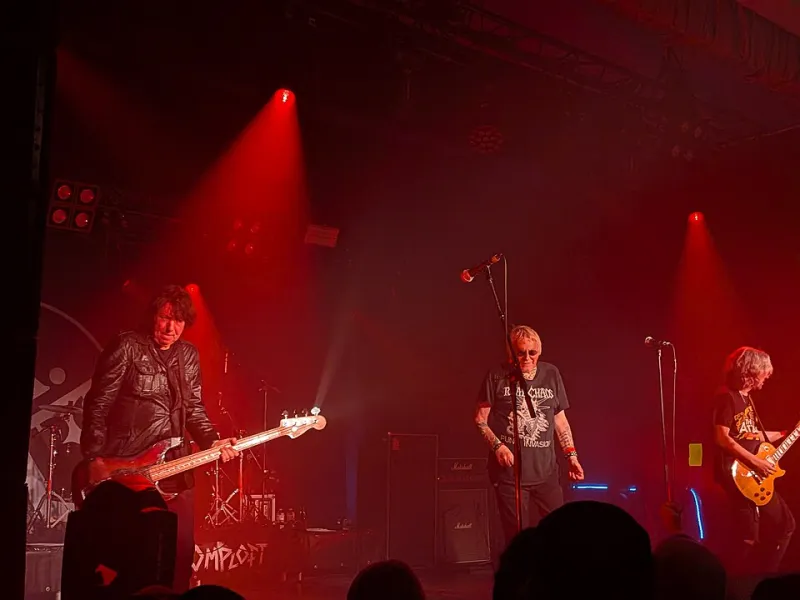
Photo: Nenea hartia, CC BY-SA 4.0, via Wikimedia Commons
There's a particular kind of success that the music industry sells you, and it looks nothing like what The Varukers have built. It involves the right producer, the right single, a slot on a mid-morning radio show, and a gradual softening of every edge that once made you dangerous. Plenty of bands from the UK punk scene took that road. Most of them are footnotes now.
The Varukers are not footnotes.
They are, by any honest reckoning, one of the most enduring and genuinely influential acts to have come out of the British hardcore punk movement. And the reason — or at least a significant part of it — is precisely because they never let anyone sand down the sharp bits.
The Offer You Refuse
It would be naive to pretend opportunities never came. Any band with the Varukers' pedigree, gigging relentlessly through the eighties and beyond, building a following that stretched from Coventry to California, was going to attract attention from people with chequebooks and agendas. The music industry has always had a nose for underground credibility. It knows that authenticity is valuable, and its first instinct is to package it.
The Varukers' response to that instinct was consistent: no thanks.
This wasn't posturing. It wasn't a carefully managed brand strategy cooked up in a PR meeting. It came from a genuine, bone-deep understanding that the moment you start making music for the people who write the cheques, you stop making music for the people who actually need it. The kids in bedsits. The ones who felt like the system had already written them off. The ones who found something in a three-minute blast of fury that told them they weren't alone and they weren't wrong to be angry.
You don't make music for those people and also make music that gets daytime Radio 1 play. Those two things are incompatible. The Varukers understood this early, and they never forgot it.
What Compromise Actually Costs
Look at the bands that did take the softer path. Some of them had genuine talent. Some of them even had something real to say, once. But the process of commercial accommodation is corrosive. It starts with small things — a slightly more polished production, lyrics that pull their punches just enough to avoid offending the wrong people, a music video that looks like it was made for someone else entirely. And then, gradually, the music itself becomes something else. Something safer. Something that no longer has the capacity to disturb anyone.
The Varukers never went through that process, and you can hear it in every record they've made. There is a continuity of fury across their catalogue that is genuinely rare. The anger on Bloodsuckers is the same anger that runs through their more recent material — not performed, not nostalgic, not curated. Real.
That consistency is worth more than any chart position. It means that when someone discovers The Varukers for the first time today — and people still do, all the time — they're not getting a heritage act coasting on past glories. They're getting the same uncompromised thing that punks were getting in the early eighties. That's extraordinary.
Influence Without Airplay
Here's the paradox that the music industry has never quite been able to get its head around: The Varukers have influenced more bands than most acts who actually topped the charts. You can trace their impact through generations of hardcore and crust punk, through bands in the UK, across Europe, in Japan, in South America. Musicians who have never set foot in Coventry have cited the Varukers as a foundational influence.
None of that happened because of radio play. None of it happened because of a major label push or a synchronisation deal or a carefully timed greatest hits compilation. It happened because the music was good and it was honest, and honest music travels in ways that manufactured music simply doesn't.
That's the thing about refusing to compromise: it doesn't just preserve your integrity, it amplifies your reach. Not in the ways the industry measures reach — streaming numbers, chart positions, algorithmic recommendations — but in the ways that actually matter. Real influence, passed hand to hand, record to record, gig to gig.
Authenticity in the Age of the Performed Self
We live now in an era where authenticity has become a marketing category. Every brand wants to seem real. Every artist is coached on how to appear unfiltered. The whole apparatus of social media is built around the performance of genuine feeling. It's exhausting, and most people can see through it.
Against that backdrop, the Varukers' actual, unperformed, decades-long refusal to play the game looks almost revolutionary. They're not authentic because someone told them authenticity was on trend. They're authentic because they never considered being anything else.
That's the thing no marketing budget can replicate. You can't manufacture a history of saying no. You can't buy the credibility that comes from four decades of doing it your way, on your terms, without apology.
The Victory That Doesn't Come With a Trophy
The charts are full of acts who got what they were chasing and then found it meant nothing. The Varukers never chased it, and what they've got instead is something far harder to acquire: a legacy that belongs entirely to them, and a fanbase that trusts them absolutely.
That trust is the real victory. It's why people travel across the country to see them play. It's why their back catalogue still gets pressed and bought and worn out. It's why younger punk bands still name-check them with genuine reverence rather than polite obligation.
No compromise. No masters. No mercy. And somehow, against all the logic of the music industry, that turned out to be the most powerful position of all.