Still Sharpening the Blade: How The Varukers Write Songs Like the World Owes Them Nothing
There's a particular kind of fraud that creeps into long-running punk bands. You've heard it. The riffs go through the motions, the vocals sound like someone reading their own Wikipedia page, and the whole thing has the energy of a bloke recounting a great night out from twenty years ago. It's not malicious — it's just what happens when bands stop being angry at the world and start being nostalgic about being angry at it.
The Varukers have never fallen into that trap. And at this point, that's not just impressive — it's genuinely worth examining.
The Problem With Getting Older in Punk
Let's be honest about the landscape. Punk has an awkward relationship with time. The genre was built on youth, urgency, and the specific rage of people who felt like the system had already decided their fate before they'd turned twenty. When those same people hit their forties, fifties, or beyond, the question becomes uncomfortable: can you still mean it?
Some bands answer that question by retreating into tribute-act territory, playing the old records front to back and letting the crowd do the emotional heavy lifting. Others chase relevance by grafting contemporary sounds onto a classic template, usually with dismal results. A few — a very few — manage to keep writing music that sounds like it actually matters right now.
The Varukers fall into that last category. And it's not an accident.
Anger Doesn't Have an Expiry Date — But It Does Need Feeding
Speak to anyone close to the band and a consistent picture emerges: the material doesn't come from trying to recapture something. It comes from paying attention.
The UK in 2024 is not short of things to be furious about. Crumbling public services. A political class that treats working people as an inconvenience. Poverty dressed up as individual failure. The same structural rot that fired up a generation of punk kids in the late seventies is still very much present — it's just wearing different branding.
What The Varukers have always understood, and what keeps their newer material from feeling like a history lesson, is that the specifics matter. Vague gestures at 'the system' age badly. Songs rooted in the texture of actual lived experience — the cost of a gas bill, the indignity of a zero-hours contract, the quiet violence of being ignored — those stay sharp.
The lyrical instinct hasn't dulled. If anything, decades of watching the same cycles repeat have given it a harder, more precise edge. There's a difference between the rage of someone who suspects the game is rigged and the rage of someone who has watched it be rigged, repeatedly, in broad daylight, for forty years.
The Discipline of Not Repeating Yourself
One of the subtler challenges for any long-running band is avoiding self-plagiarism. When you've written as much material as The Varukers have, the temptation to return to familiar chord shapes and comfortable lyrical territory must be significant. The path of least resistance is always available.
What's interesting about their more recent output is the evidence of active resistance to that pull. The structures are leaner in places, less willing to rely on the listener's goodwill toward familiar sounds. There's a restlessness to the arrangements that suggests a band interrogating their own habits rather than indulging them.
That kind of self-awareness is rarer than it should be. It requires a certain brutal honesty — sitting with a new riff or a half-finished lyric and asking whether it's actually saying something or just sounding like you. For a band with The Varukers' back catalogue, the ghost of past glories is always in the room. The trick is not letting it write the songs.
What the Stage Teaches the Studio
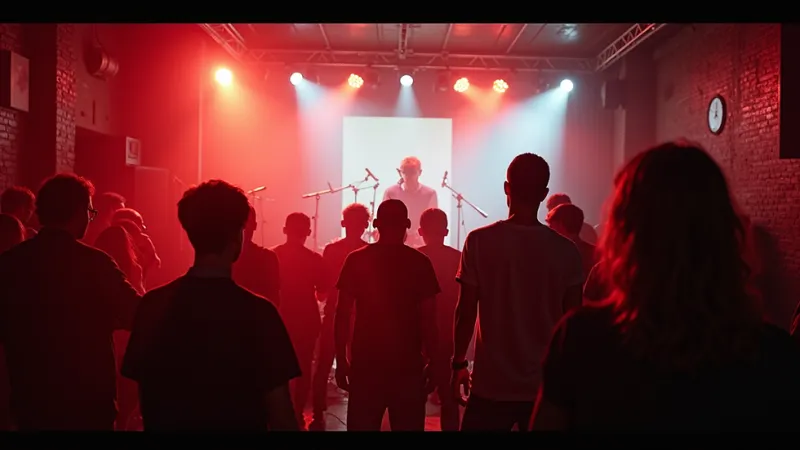
Another factor that doesn't get enough credit: The Varukers have never really stopped gigging. And gigging — properly gigging, in sweaty rooms in front of people who are there because they care — is one of the most effective antidotes to creative complacency there is.
When you're standing in front of a crowd that knows every word, you feel immediately whether a new song holds its own. There's no algorithm to flatter you, no streaming metric to misread as validation. The room either responds or it doesn't. That feedback loop, unmediated and immediate, keeps the writing honest in a way that studio isolation never quite can.
The Varukers have always been a live band first. The recordings document; the gigs define. And that priority — that insistence on the visceral, physical reality of music as something that happens between people in a room — shapes what gets written in the first place. Songs have to work at volume, in front of people, with no production trickery to paper over the cracks. That's a discipline that enforces quality in ways that are hard to replicate any other way.
Legacy as Pressure, Not Comfort
Here's the thing about having a catalogue that genuinely matters to people: it can either free you or paralyse you. For some bands, the weight of their own legacy becomes an excuse for coasting — why take risks when the crowd will happily accept another record that sounds like the last one?
For The Varukers, the legacy appears to function differently. It's not a comfort blanket; it's a standard to be met. When you've written songs that have genuinely meant something to people — songs that got played at full volume during the worst moments of strangers' lives, songs that articulated something real about what it feels like to be working class and furious in Britain — you don't get to phone it in.
That sense of responsibility to the music, rather than just to the band's reputation, is what separates the ones who keep meaning it from the ones who don't.
Why It Still Matters
Punk has never been short of critics willing to declare it finished, irrelevant, or safely preserved in amber as a cultural artefact. Every decade brings a fresh round of obituaries. And every decade, bands like The Varukers make those obituaries look stupid.
The reason isn't nostalgia, and it isn't stubbornness for its own sake. It's that the conditions that made punk necessary in the first place have never gone away. The anger isn't manufactured — it's a rational response to an irrational world, and The Varukers are still paying close enough attention to feel it properly.
Four decades in, still sharpening the blade. Don't expect them to put it down anytime soon.