Words Like Wire: The Unflinching Political Vision Woven Through The Varukers' Greatest Songs

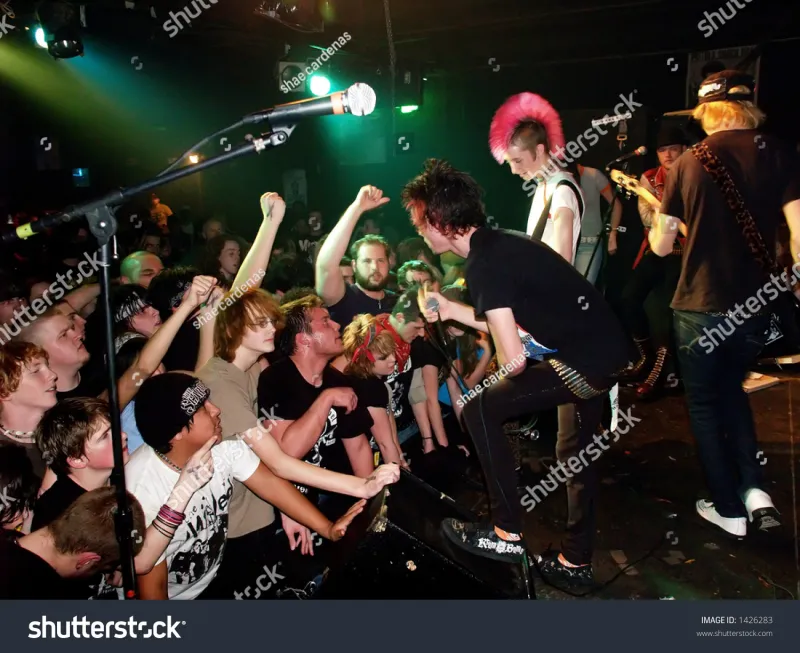
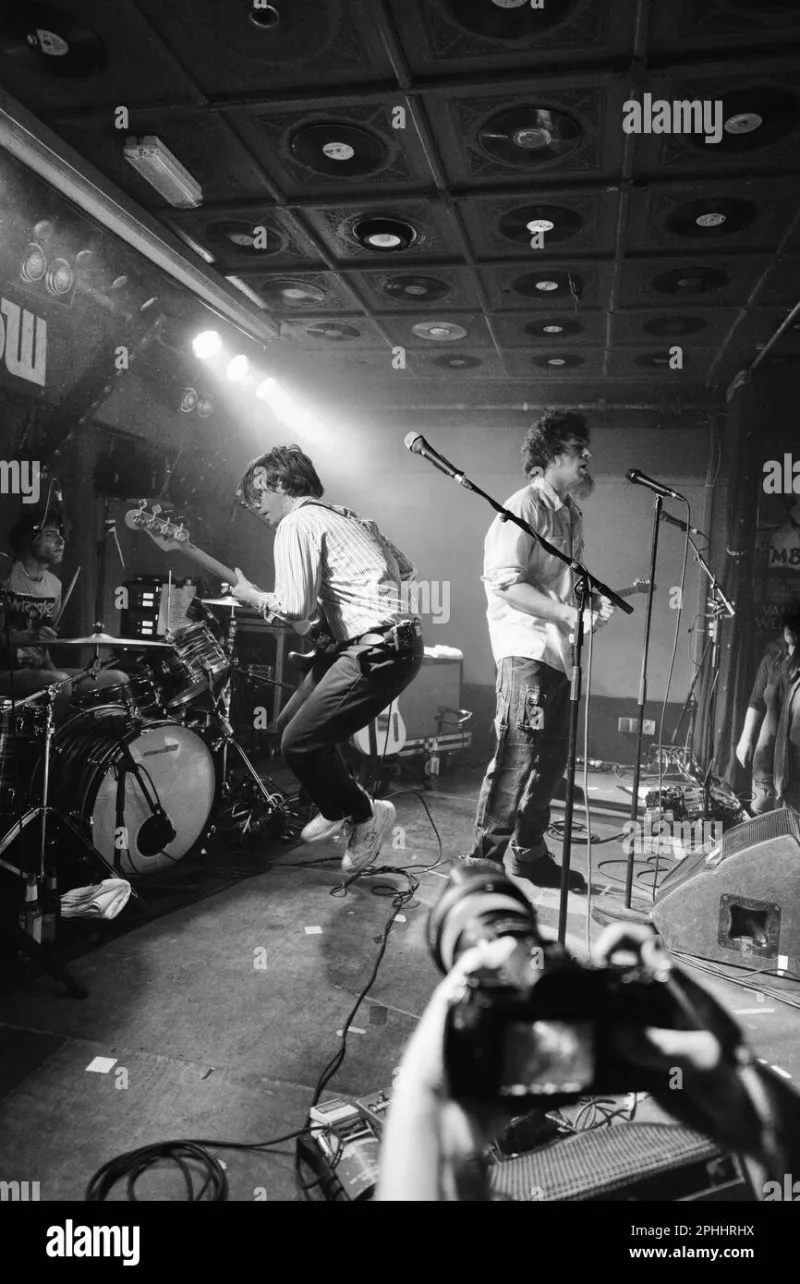
Photo: From top left to right down 1. de:Benutzer:Calzinide 2. Sven-Sebastian Sajak (Sven0705) 3. Cameraman Greg 4. Quercusrobur, Public domain, via Wikimedia Commons
Most bands age badly when you hold their politics up to the light. Slogans that once felt electric go stale. Anger that seemed specific becomes vague. The context that made a lyric sting fades into historical footnote. The Varukers are a peculiar exception to this pattern — and the reason why says something important about both the band and the country they've always written about.
Britain in 2024 is, in many measurable ways, closer to the Britain of 1982 than most people are comfortable admitting. The particulars have shifted — the enemy wears different suits, the crises have different names — but the structural realities that fuelled The Varukers' earliest recordings are not only still present, they've deepened. That's not a comfortable observation. It is, however, the context in which their lyrics need to be read.
The Varukers as Political Document
To listen to The Varukers' back catalogue with any seriousness is to receive a fairly comprehensive education in the social conditions of post-industrial Britain. Rat's lyrics have never been interested in abstraction. They don't traffic in vague gestures toward systemic injustice — they name it, describe it, and express a fury about it that feels almost physically present even through a recording.
Take 'Die for Your Government,' one of the band's most enduring tracks. The anti-war sentiment embedded in that song wasn't written as a timeless philosophical statement; it was a direct response to the Falklands conflict and the way working-class men were being asked to bleed for political convenience. Decades on, with British military interventions in Iraq and Afghanistan still casting long shadows, the lyric has acquired new layers it never needed to seek out. The anger hasn't become metaphorical with age. It's become, if anything, more literal.
This is the hallmark of genuinely political songwriting: it doesn't age because the conditions that produced it don't disappear. They just get rebranded.
'Sentenced to Death' and the Architecture of Despair
The album 'Sentenced to Death' remains one of the essential documents of UK hardcore punk, and its title track is a masterclass in compressed political fury. The lyric functions on multiple levels simultaneously — it's about nuclear threat, yes, but it's also about the specific helplessness of being young and working-class in a country that seems to have decided your future is expendable.
That dual quality — the global and the intensely personal existing in the same breath — is something The Varukers achieved with a consistency that most political bands only manage occasionally. The nuclear anxiety that runs through so much of their early work wasn't abstract Cold War paranoia. It was inseparable from the daily reality of communities that had already been written off by Westminster before any bomb was dropped.
Listening to those tracks now, what strikes you is how the emotional logic remains completely intact. The specific political context has shifted but the feeling — of being governed by people who regard your survival as negotiable — is something a significant portion of the UK population would recognise without any historical footnote.
Thatcher's Britain as a Recurring Character
It's impossible to analyse The Varukers' lyrics without spending time in the wreckage of Thatcherism. The systematic dismantling of industrial communities, the assault on trade union power, the aggressive promotion of individualism as a civic virtue — all of this runs through their work like a current. And unlike some of their contemporaries who addressed these themes in more coded ways, The Varukers were direct to the point of bluntness.
That directness was sometimes dismissed by critics as lacking sophistication. The counter-argument — and it's a convincing one — is that the communities being described didn't have the luxury of subtlety. When your town's main employer has just been closed and the government's official position is that this represents progress, a carefully ambiguous lyric isn't really the appropriate response.
The Varukers wrote for people who needed their anger reflected back at them without qualification. That's not a failure of nuance; it's a choice about who you're writing for.
The Anti-Authority Thread
Running through virtually every phase of the band's catalogue is a consistent, uncompromising scepticism toward authority in all its forms. This isn't the vague anti-establishment posturing that gets co-opted into advertising campaigns. It's a specific, structurally-grounded argument that power corrupts, that institutions protect themselves at the expense of individuals, and that the appropriate response to this is permanent vigilance rather than occasional complaint.
What's striking when you map this across their discography is how the targets shift without the underlying analysis changing. The specific villains — Tory governments, warmongering leaders, police brutality — are historically located. But the framework for understanding why those things happen and who they happen to remains constant. It's a coherent political worldview, not just a collection of angry moments.
In an era of increasingly hollow political messaging — where outrage is manufactured and sold back to people as identity — there's something genuinely clarifying about lyrics that have maintained their analytical consistency across four decades.
How the Words Land Now
A younger listener coming to The Varukers for the first time in 2024 doesn't need a history lesson to feel the force of what they're hearing. The language of austerity, of communities abandoned by central government, of young people facing a future deliberately made more precarious than their parents' — all of it creates an immediate point of entry.
This is both a tribute to the writing and a fairly damning commentary on how little has changed. The Varukers' songs work as historical documents and as live ammunition simultaneously, which is an unusual and uncomfortable achievement.
The political rage encoded in their lyrics was never meant to be timeless. It was meant to be a response to specific injustices that, in a better world, would have been corrected. The fact that the songs remain so viscerally relevant isn't a compliment to their craft alone — it's an indictment of the country that made them necessary in the first place.
No masters. No mercy. And, apparently, no expiry date.